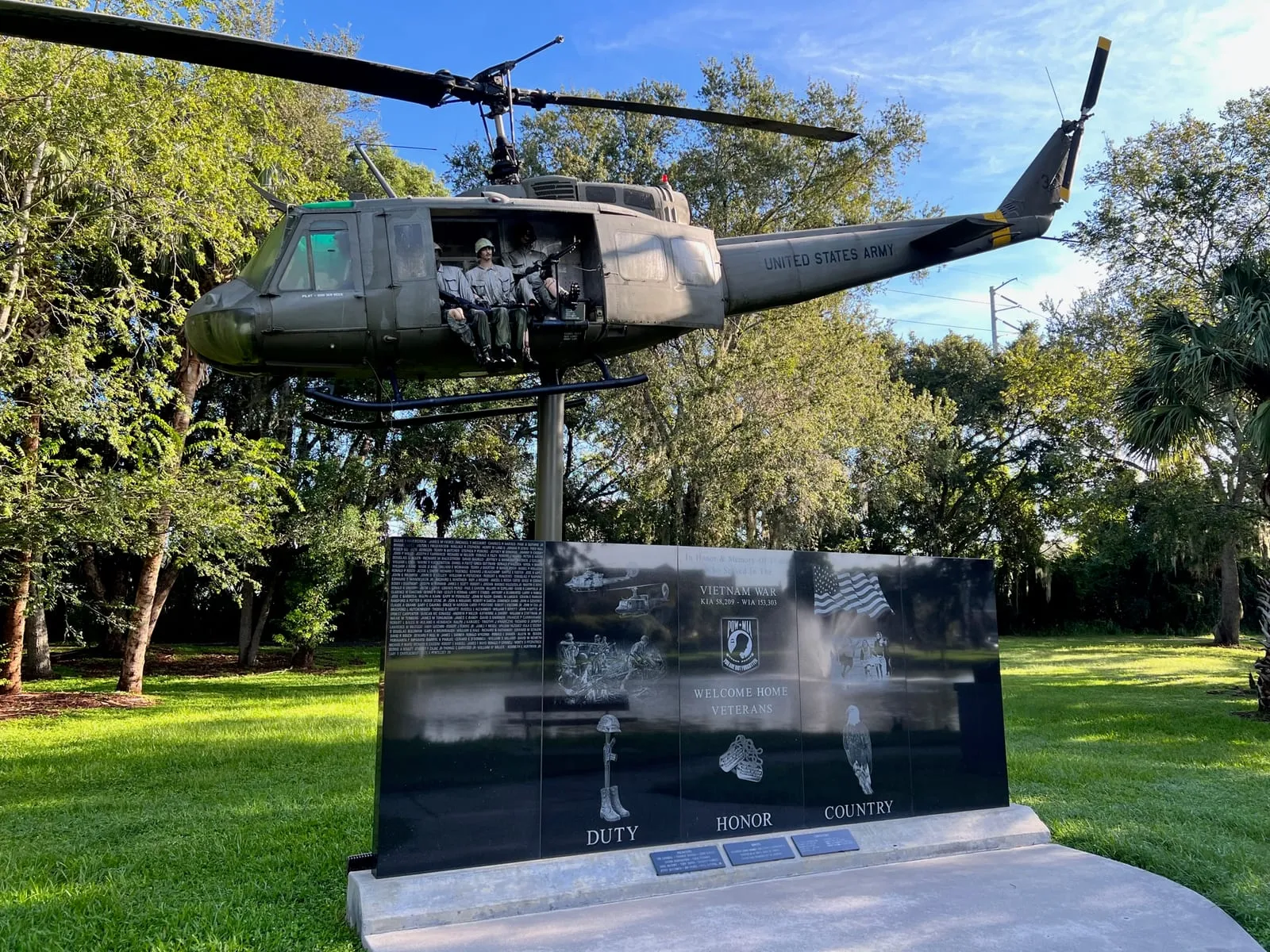
The standard English-language phrase is "the Vietnam War." The Vietnamese name is Kháng chiến chống Mỹ — the resistance war against America. Both phrases obscure the basic shape, which is that there were two major wars in Vietnam in the second half of the twentieth century: a French war (1946-1954) and an American war (1955-1975), separated by less than a year. The Vietnamese fought essentially the same political project across both. The Western powers fought essentially the same misunderstanding.
This essay treats them as one continuous Vietnamese war of independence with two phases.
What both sides were actually fighting about
For the Vietnamese revolutionary leadership — the Việt Minh in the first war, the Democratic Republic of Vietnam (North Vietnam) and the National Liberation Front (the Viet Cong) in the second — the project was a single one: an independent, unified Vietnamese state, organized along socialist lines, with no foreign military presence. The leadership did not change between the two wars. Hồ Chí Minh, Võ Nguyên Giáp, Phạm Văn Đồng, Lê Duẩn, Trường Chinh — these were the same people running the same project for thirty years.
For the French in 1946-1954, the project was the maintenance of colonial control over Indochina, partly for economic reasons and partly for prestige reasons. France had been humiliatingly defeated by Germany in 1940 and was, in 1945-46, in a fragile position politically; losing the empire was unthinkable to the political class.
For the Americans in 1955-1975, the project was preventing the spread of communism in Southeast Asia, on the theory (the "domino theory") that a communist victory in Vietnam would trigger communist takeovers across the region and represent a strategic loss to the United States in the broader Cold War contest. The American project was inherited from the French — the United States had funded a substantial portion of the French war by its later years — and it carried over the French framing that the war was primarily about communism rather than primarily about Vietnamese independence.
The Vietnamese assessment was that this was a category error. They were fighting for independence first; the socialist character of the state they were building was secondary, instrumental, and driven by what had organized the most disciplined anti-colonial movement under colonial conditions. Many later assessments — including those of senior American officials in retrospect — concluded that the Vietnamese assessment was correct and the American assessment was wrong, and that the war was, in essence, lost the moment the Americans framed it as a Cold War proxy contest rather than as a colonial succession problem.
The First Indochina War (1946-1954)
The French returned to Vietnam in 1945-46, after the Japanese surrender, intending to reassert colonial control. The Việt Minh had already declared independence and held substantial parts of the country, especially in the north.
Initial negotiations failed. By December 1946, full-scale war had broken out, with the French controlling the cities and the Việt Minh dominating the countryside. The Việt Minh strategy, designed by the schoolteacher-turned-general Võ Nguyên Giáp, was a phased Maoist-style war: protracted guerrilla resistance in phase one, regional conventional capability in phase two, decisive set-piece battles in phase three. The strategy required time, terrain, and a political structure that could mobilize the rural population. All three were available.
The war ground on for eight years. The French committed an army of roughly 250,000 metropolitan and colonial troops at peak, plus a further 200,000 Vietnamese auxiliaries (the Bao Dai state's army, used by the French as a counter-insurgent force). The Việt Minh fielded a comparable regular force by the mid-1950s, plus a much larger political-militia infrastructure in the rural countryside. American support to the French rose from minimal in 1950 to roughly 80% of French war costs by 1954.
The decisive battle was Điện Biên Phủ, March-May 1954, in a remote valley near the Lao border. The French had built a fortified base there to draw the Việt Minh into a set-piece battle they would lose. Giáp accepted the bait but reversed the geometry: he moved heavy artillery overland, by porter and by improvised hauling, into the hills surrounding the French valley fortress, dug it in beyond the reach of French counter-battery fire, and methodically reduced the French airfield (the only resupply route) and then the perimeter strongpoints. After 56 days of siege, the French garrison surrendered on May 7, 1954.
The Geneva Accords, signed in July 1954, ended the war. They partitioned Vietnam temporarily at the 17th parallel, with the Việt Minh administering the north (the Democratic Republic of Vietnam) and the French and their allies administering the south (initially under the Bao Dai monarchy, then under Ngô Đình Diệm's republic from 1955). National unification elections were scheduled for 1956. The elections never happened — the Diệm government, with American backing, refused to participate, on the correct expectation that the Việt Minh would win them.
The Second Indochina War (1955-1975)
What followed was, in effect, an extension of the first war: the Việt Minh leadership continued the project of unification and now had to organize a southern insurgency against the Diệm government. The southern insurgency, formally constituted as the National Liberation Front in 1960, drew partly on Việt Minh networks that had remained in the south after 1954.
American involvement deepened in stages. Eisenhower sent advisors. Kennedy increased the advisor presence to about 16,000 by his death in 1963. In November 1963, Diệm was assassinated in a coup the United States acquiesced to. A series of unstable South Vietnamese governments followed.
The Gulf of Tonkin incident in August 1964 — the disputed reports of a North Vietnamese naval attack on a US destroyer — produced the congressional resolution that authorized the Johnson administration to deploy combat troops without a formal declaration of war. By the end of 1965, there were roughly 184,000 American military personnel in Vietnam. By 1968 the figure peaked at over 540,000.
The American war strategy was attrition: identify and destroy enemy combatants and infrastructure faster than the enemy could replace them. The strategy depended on quantitative superiority — air power, helicopter mobility, heavy artillery, mass — and on the assumption that the enemy had a finite mobilization base.
Both halves of the assumption were wrong. North Vietnam (with substantial Chinese and Soviet support) and the southern insurgency had access to a much deeper political mobilization base than the strategy assumed. The southern population was not, on net, hostile to the insurgency in the way the strategy required — many supported it actively, many tolerated it tacitly, and the South Vietnamese government's popular legitimacy was weak enough that the war could not be won as a counter-insurgency. The American military killed enormous numbers of enemy combatants — estimates of military deaths over the full war range from 850,000 to over 1.3 million on the North Vietnamese and NLF side — and was unable to translate the kill count into a political result.
The Tết Offensive of January-February 1968 was the strategic turning point in the political war, even though it was a military defeat for the North Vietnamese and NLF forces who launched it. The offensive — coordinated attacks on cities and bases throughout South Vietnam, including a brief penetration of the US embassy compound in Saigon — was driven back with very heavy NLF losses. But the optics, in American newsrooms and American political consciousness, were that the war was not being won and possibly could not be. American public opinion, which had been broadly supportive of the war effort through 1967, began turning decisively against it.
President Johnson decided not to seek re-election in 1968. The Nixon administration, taking office in 1969, undertook a strategy of "Vietnamization" — gradual withdrawal of American ground forces while maintaining air and naval support and rebuilding the South Vietnamese military for self-sufficiency. The withdrawal was paired with a strategic widening of the war into Cambodia (the secret bombing campaign and the 1970 invasion) and Laos, on the theory that destroying North Vietnamese supply networks through those countries would compensate for the American ground withdrawal.
The Paris Peace Accords were signed in January 1973. American ground forces withdrew. Aid to South Vietnam continued at a reduced level, then was further reduced by Congress. In March 1975, North Vietnamese forces launched a final offensive that South Vietnamese forces were unable to halt. Saigon fell on April 30, 1975. The country was unified under the Hanoi government.
What the wars cost
In rough numbers, drawn from the more credible recent assessments:
- Vietnamese military deaths (both sides combined, both wars combined): approximately 1.0 to 1.5 million.
- Vietnamese civilian deaths: approximately 1.5 to 2.0 million across both wars (estimates vary widely).
- Cambodian and Laotian civilian deaths from the spillover wars and bombing: at least several hundred thousand additional, with the Cambodian total complicated by the subsequent Khmer Rouge genocide.
- French military deaths in the First Indochina War: approximately 75,000 (including French metropolitan, colonial, and Foreign Legion forces).
- American military deaths in the Second Indochina War: 58,220.
- Tonnage of bombs dropped by the United States on Indochina (1965-1975): approximately 7 million tons — substantially more than the total tonnage dropped by all sides in the Second World War.
The country was poisoned in places — the Agent Orange defoliation campaign across South Vietnam left dioxin contamination at a number of sites, with documented health effects across multiple generations. The unexploded ordnance from the war continues to kill and maim Vietnamese, Cambodian, and Lao civilians at a rate that has dropped over the decades but has not reached zero; about 100,000 unexploded-ordnance casualties have been recorded since the war's end.
What the wars settled, and what they did not
The wars settled the question of Vietnamese independence and unification. Vietnam after 1975 was a single country governed from Hanoi. The colonial period was definitively over.
The wars did not settle Vietnam's economic model. The first decade after reunification was a deeply painful period of state-socialist agriculture and industry, with substantial economic mismanagement, suppression of southern entrepreneurial culture, and the emigration of perhaps a million people — the so-called "boat people" — to other countries. We will turn to that, and to the Đổi Mới reforms that resolved it, in the next essay.
The wars also did not settle the relationship between Vietnam and its neighbors. The brief Sino-Vietnamese War of 1979 — China invaded northern Vietnam in retaliation for Vietnam's invasion of Khmer Rouge Cambodia, and was repulsed after a month of heavy fighting — was a reminder that Vietnam's strategic environment, even after expelling the French and the Americans, remained complex.
What stayed with me
That two of the most powerful militaries on earth, in two consecutive decades, persuaded themselves that they could win a war whose Vietnamese architects had explicitly told them, at every step, what kind of war it was. The Vietnamese strategy was published, openly, by Giáp in books that French and American officers read. The political base of the resistance was visible to anyone willing to look at it. The cost of imposing a foreign-aligned government on a country with a thousand-year tradition of resisting foreign-aligned governments was, in retrospect, predictable. Both wars were, in this sense, strategic information failures: the relevant facts were available, and ignored.
That kind of failure is not unique to Vietnam — it is, in some form, the recurring failure of imperial powers throughout history. The Vietnamese version is just unusually well-documented and unusually bloody.