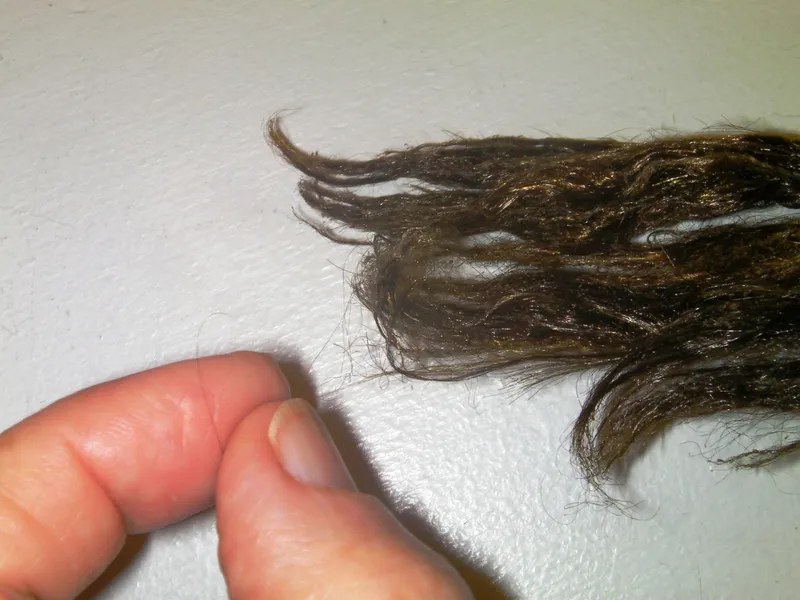
There is a fabric called bisso in Italian, byssus in Greek, that has been made on the same handful of Mediterranean islands for at least two thousand years. It is golden in color, lighter than the lightest silk, and it cannot be bought.
The thread is harvested from the Pinna nobilis, a meter-tall fan-shaped clam that anchors itself to the seabed by a tuft of fine, strong filaments — its byssus. A diver cuts loose the tuft (the clam regrows it), washes it in fresh water and lemon, combs it, twists it, and ends up with a thread the color of antique gold.
What the fabric does
Byssus has unusual optical behavior — it glows a deep amber in direct sun and looks brown in shade. It is light enough that a finished glove fits inside half a walnut shell. It does not dye well; the natural color is the color, and what variation exists comes from how long the filaments soaked in lemon juice during processing.
Mentions appear in the Hebrew Bible, in Greek and Roman records, in the inventories of Byzantine emperors. There are byssus garments in the Louvre and the Vatican. Pliny the Elder describes it. The fabric was, for most of recorded Mediterranean history, a luxury good for emperors and high priests.
What is left
The Pinna nobilis is now critically endangered, hit hard since 2016 by a parasite that has wiped out an estimated 99% of the population in some bays. Modern harvest of byssus is illegal almost everywhere — and on Sant'Antioco, where the practice survived continuously into the twentieth century, the local conservator Chiara Vigo holds what may be the last living lineage of the technique.
Vigo's position is unusual: she will not sell what she makes. Items leave her workshop only as gifts, often to museums or to people she has decided personally are owed one. The economic logic of byssus has been deliberately removed from byssus, on the theory that the moment it becomes a commodity again is the moment its remaining ecology collapses.
What stayed with me
That a craft can survive for two thousand years at the scale of one family on one island, and that the discipline keeping it alive — refusing the market — is a deliberate, modern choice. The raw material is older than Rome. The decision to keep it out of circulation is forty years old.